How Lovette Emma Gave an Entire Generation Permission to Just Be Honest
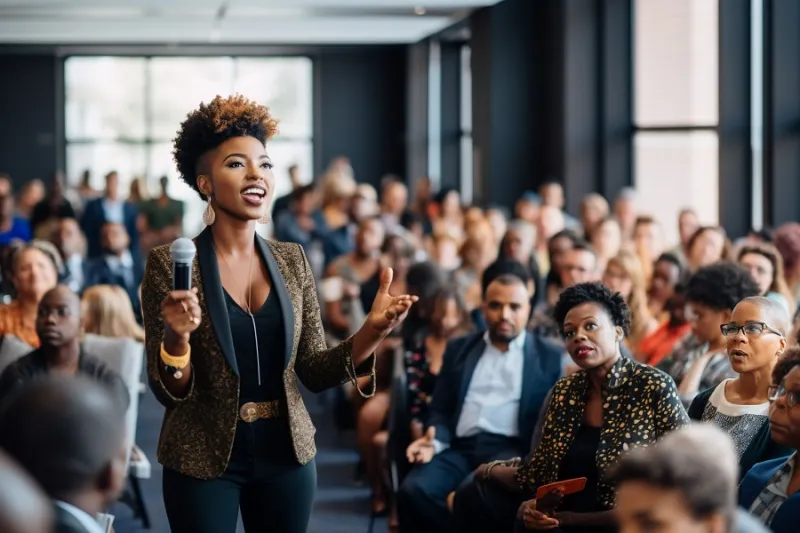
Photo: woman speaking authentically to audience empowerment community connection, via www.patiencechisanga.com
There's a phrase that keeps coming up in creator circles, in comment sections, in DMs between strangers who found each other through shared experiences online: "She made me feel like it was okay."
The "she" is almost always Lovette Emma.
And what she made people feel okay about varies wildly — talking about burnout, admitting they don't have it figured out, stepping back from hustle culture, being messy and public about it. But the throughline is always the same. Someone watched, listened, or read something Lovette put out into the world, and something in them exhaled.
That exhale? That's the Lovette Emma effect.
It Started With Her, But It Didn't Stay There
When Lovette Emma first started showing up differently — less polished, more present, trading highlight reels for honest ones — the reaction wasn't immediately universal applause. There was confusion. A little friction. The internet, trained to reward perfection, didn't always know what to do with someone who was deliberately, intentionally not performing.
But something interesting happened. The audience that found her didn't just consume what she was putting out — they started mirroring it. Fans began sharing their own stories in her comment sections. Small creators who followed her work started loosening up in their own content. People who had nothing to do with the creator economy started applying the same logic to their personal lives: if she can say that out loud, maybe I can too.
This is what cultural permission looks like in real time. It doesn't come from a policy change or a trend piece. It comes from one person going first.
The Ripple Into the Creator Space
Lovette's influence on other creators is one of the more fascinating parts of her story — especially because it's largely unspoken. You won't find a lot of people directly crediting her in their content. But spend enough time in the personal branding and lifestyle creator world, and you start to notice patterns that track back to her approach.
Creators who once kept a strict boundary between their "brand" and their actual life have started letting that wall come down. The language around storytelling shifted — less "content strategy" and more "this is just something real that happened to me." The obsession with aesthetic consistency gave way, at least in some corners of the internet, to something messier and more human.
None of that happens in a vacuum. And while Lovette Emma isn't the only voice pushing in this direction, she's one of the clearest and most consistent ones. She didn't just model vulnerability — she showed that it could be sustainable. That you didn't have to blow up your whole brand to be honest. That the two things could coexist.
For a lot of newer creators trying to figure out who they are online, that was genuinely new information.
What It Means for the People Who Aren't Creators
Here's the part of this conversation that sometimes gets skipped over: most of Lovette Emma's audience isn't building a personal brand. They're just people — people with jobs and families and complicated inner lives who found something in her universe that resonated.
For them, the permission-giving works differently. It's not about content strategy or audience growth. It's about something quieter. Watching someone they admire talk openly about anxiety, about not having answers, about the gap between who you present yourself as and who you actually are — it does something to the way you hold your own experience.
Psychologists have a term for this: social modeling. When we see someone we respect engage in a behavior — especially a vulnerable or risky one — our brain quietly updates its sense of what's acceptable. Lovette Emma, whether she set out to or not, has been doing this at scale for years.
The cultural result is a community of people who are, on average, a little more willing to tell the truth. A little less likely to perform okayness when they're not okay. That's not nothing. That's actually a lot.
The Industry Is Paying Attention
Beyond individual creators and fans, there's a broader industry conversation happening — and Lovette Emma's model keeps coming up as a reference point.
Brands are rethinking what "authenticity" means in partnerships. The old playbook — find a polished influencer, hand them talking points, watch the sponsored content roll out — is losing effectiveness fast. Audiences have gotten good at spotting performance. What converts now is something that feels real, and that means the creators who've built their whole thing on realness are suddenly the most valuable people in the room.
Media companies are also paying attention to how Lovette's approach to storytelling holds attention in ways that traditional entertainment formats are struggling to. Long-form vulnerability, personal narrative, community-building through honesty — these aren't just nice values. They're proving to be durable business models.
The entertainment industry loves to chase what's working. Right now, a version of what Lovette Emma has been doing is working everywhere you look.
Permission Is Contagious
Maybe the most remarkable thing about the Lovette Emma effect is how self-replicating it is. She gave permission to someone, who gave it to someone else, who gave it to someone else. The original source fades into the background, but the energy keeps moving.
That's how cultural shifts actually happen. Not from the top down, not from a single viral moment, but from enough people watching one person go first and deciding they can go next.
Lovette Emma went first. A lot. Consistently, over time, in ways that were probably uncomfortable and definitely risky. And the universe she built — this community, this ongoing conversation — is the direct result of that.
For fans who've been here since early on, none of this is surprising. You already knew what she was doing. You felt it before anyone was writing think pieces about it.
For everyone discovering her now: welcome. There's a reason this place feels different from most corners of the internet.
She made it that way on purpose.