How Lovette Emma Turned Her Audience Into the Creative Team

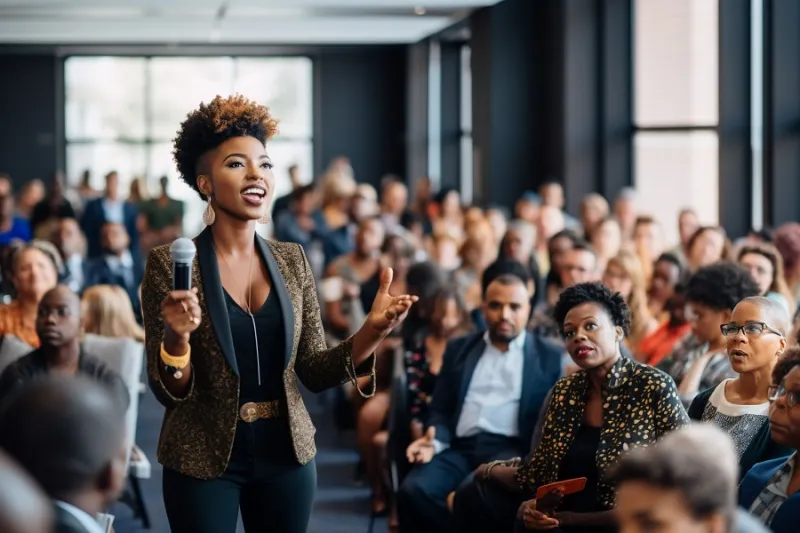
Photo by Photo by Vitaly Gariev on Unsplash on Unsplash
There's a version of building an audience that looks like broadcasting. You make the thing, you post the thing, people respond to the thing. Rinse, repeat. It works well enough — until it doesn't. Until you realize you've been talking at people instead of with them, and somewhere along the way the connection you thought you had started to feel more like a transaction.
Lovette Emma never really bought into that model. Or if she did, she left it behind fast. What she built instead is something that doesn't have a clean name yet — part community, part creative partnership, part ongoing conversation that never fully ends. Her fans aren't just an audience. They're collaborators. And understanding how that happened says a lot about what actually makes a personal brand stick.
It Started With Actually Listening
This sounds obvious. Every creator will tell you they listen to their community. But there's a difference between skimming comments for validation and treating your audience like they have something real to contribute. Lovette Emma landed firmly on the second side of that line.
Early on, she made a habit of not just reading feedback but responding to patterns in it. When fans kept circling back to a specific topic — something she'd touched on briefly but hadn't fully explored — she didn't file it away and move on. She made the piece. She went deeper. She came back to the thread and said, essentially, you asked for this and here it is.
That shift is subtle but massive. It signals to your audience that they're not shouting into a void. It tells them their input has weight. And once people believe their voice matters, they start using it more — which means you get better, more honest feedback, which makes the work sharper. It's a cycle that feeds itself.
The Feedback Loop She Actually Built
One of the things that separates Lovette Emma from creators who say they value community input is that she built actual infrastructure around it. Not complicated infrastructure — but intentional infrastructure.
Polls, Q&As, open-ended prompts dropped into her content asking fans what they wanted to see next. Comment threads she'd revisit days later. DMs she'd pull quotes from (with permission) and turn into conversation starters. These weren't just engagement tactics for the algorithm. They were genuine data collection — a way of keeping her finger on the pulse of what her community was actually thinking and feeling.
She also got good at reading the absence of response. When something landed flat, she paid attention to that too. The silence told her as much as the noise.
Over time, this created something rare: a community that felt genuinely heard. And when people feel heard, they show up differently. They're more invested. They care about the outcome because they had a hand in shaping it.
When Fan Input Actually Changed the Work
This is where it gets concrete. There are real examples — moments where the Lovette Emma universe took a turn because the community pushed in a direction she hadn't fully anticipated.
Fans have flagged topics they wanted explored more deeply, and she's built full pieces around those requests. They've asked for behind-the-scenes access and she's opened doors. They've responded to certain formats with so much energy that she's restructured how she delivers content entirely — not because a strategist told her to, but because the people she was making stuff for made their preferences clear and she respected that enough to act on it.
That responsiveness isn't just good community management. It's good creative instinct. The best collaborators aren't always the ones you hire — sometimes they're the ones already paying attention to everything you make.
What Other Creators Can Actually Take From This
The Lovette Emma model isn't about giving your audience creative control. It's about creating genuine dialogue and then having the confidence to let that dialogue influence your decisions.
A few things stand out as transferable:
Make asking a habit, not an event. Don't poll your audience once a quarter as a PR move. Build low-stakes questions into your regular content. Make it feel like a conversation, not a survey.
Close the loop. When you use fan input, say so. Credit the community. Tell them their feedback led to this piece, this format, this decision. That acknowledgment is what turns a one-time contributor into a long-term collaborator.
Let the data be uncomfortable sometimes. If your community is consistently asking for something you haven't delivered, that's information. It might mean pivoting. It might mean being honest about why you're not going in that direction. Either way, ignoring it isn't a strategy.
Distinguish between noise and signal. Not every comment is actionable feedback. Part of what Lovette Emma got good at was identifying the patterns — the things multiple people were saying in different ways — versus the one-off requests that didn't reflect a broader need. That discernment is a skill, and it gets sharper with practice.
Why This Builds Something Sturdier Than a Following
Here's the thing about audiences: they're fragile. Algorithms shift. Platforms change. Attention spans move on. A following built on passive consumption can evaporate faster than you'd think.
But a community built on genuine participation? That's a different animal. When people feel like they helped build something, they have a stake in it. They're not just consumers — they're part of the story. And that kind of investment is a lot harder to walk away from.
Lovette Emma understood this, maybe intuitively, maybe through trial and error, probably both. The universe she's built isn't just about what she creates — it's about what her community co-creates with her. That's the real flex. Not the follower count. Not the engagement rate. The fact that when she makes something, there are thousands of people who feel like they had a hand in it.
That's not an audience. That's a movement. And movements don't just follow — they build.
If you're a creator trying to figure out why some brands feel alive and others feel like content machines, look at the relationship they've built with the people watching. Lovette Emma's answer has always been the same: treat your audience like they matter, and they'll show you they do.