The Quiet Systems Behind Every Lovette Emma Post You've Ever Loved
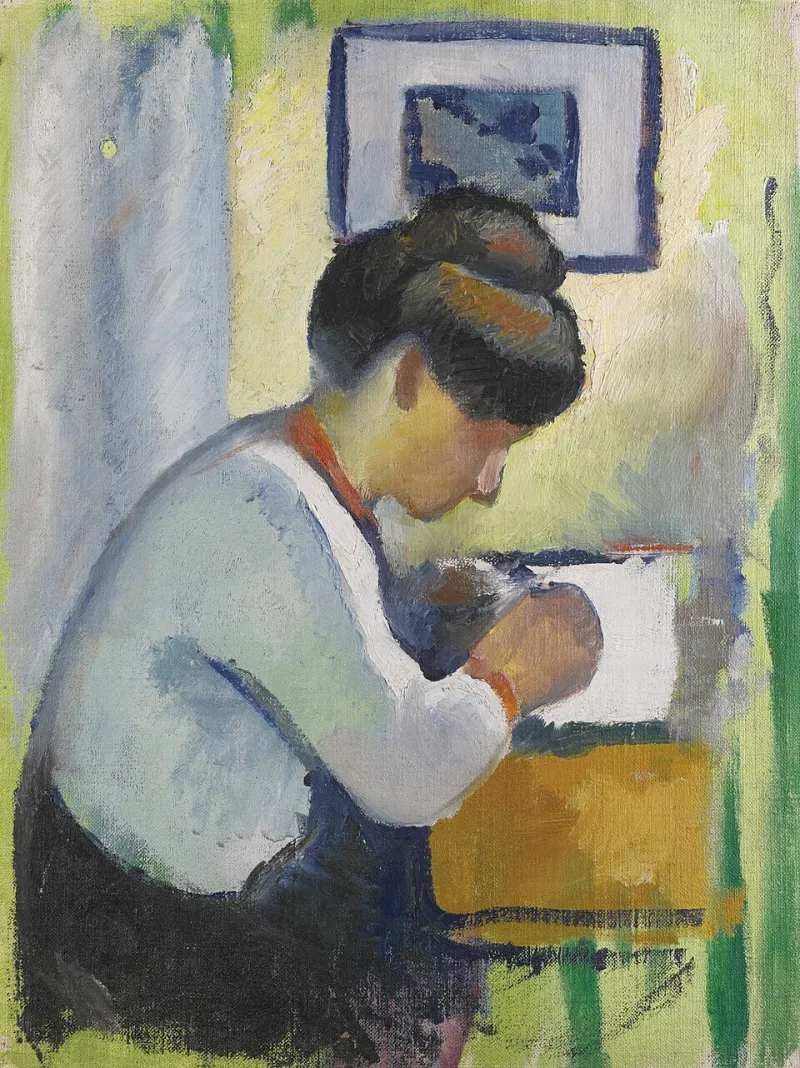
Photo: August Macke, Public domain, via Wikimedia Commons
The Stuff That Doesn't Make the Feed
There's a version of the creative process that looks good on camera: the golden-hour brainstorming session, the perfectly organized desk, the mood board that doubles as wall art. And then there's the version that actually keeps things running — the unglamorous, repetitive, sometimes boring infrastructure that makes consistent output possible.
For Lovette Emma, the second version is where most of the real work lives.
This isn't a piece about productivity hacks or morning routine aesthetics. It's about the less photogenic side of building something that works across multiple platforms, across different moods, across weeks when inspiration is nowhere to be found. Because that side of things? It's a lot more instructive than the highlight reel.
She Doesn't Wait for the Mood to Strike
One of the most common myths about creative people is that they produce their best work when inspiration hits. The romantic version of the artist waiting for the muse is appealing, but it's also a recipe for inconsistency — and inconsistency is the thing that quietly kills online communities.
Lovette Emma operates on a different principle: show up to the work first, and let the inspiration follow. It sounds counterintuitive until you've actually tried it. Sitting down without a fully formed idea and just starting — writing a rough caption, filming a test clip, jotting down half-thoughts in a notes app — creates its own momentum. The act of starting is what unlocks the good stuff, not the other way around.
This isn't a new idea. A lot of professional writers, musicians, and filmmakers talk about it. But in the creator space, where the pressure to produce only polished, inspired content is constant, it's a surprisingly radical practice.
The Notebook That Goes Everywhere
Ask almost anyone who creates consistently and you'll find some version of this: a dedicated space to catch ideas before they disappear. For Lovette Emma, it's a physical notebook — not an app, not a voice memo folder, not a Pinterest board. An actual notebook that goes with her everywhere.
The reasoning is practical. Phones are distracting. Opening a notes app means potentially opening seventeen other things instead. A notebook is just a notebook. You write in it, you close it, you move on.
The entries aren't polished. They're not meant to be. A line of dialogue overheard at a coffee shop. A question she's been sitting with. A concept that might be a post or might be nothing. The point isn't to generate finished ideas — it's to capture the raw material before daily life swallows it whole.
Later, during designated review time, those rough entries get sorted. Some get developed. Most don't. But the ones that do often become the content that resonates most, because they started as something genuinely noticed rather than something manufactured to fill a slot.
Decision Fatigue Is Real — So She Limits Her Choices
One of the more surprising habits in Lovette Emma's process is how deliberately she constrains her own options. On days when she's creating content, she keeps the variables tight: a limited set of formats she's comfortable with, a small range of topics she's been thinking about recently, a rough time window for filming or writing.
This sounds like the opposite of creative freedom, but it actually functions as a protection against one of the biggest creativity killers out there — decision fatigue. When every aspect of a piece of content is up for grabs, the cognitive load of choosing becomes its own obstacle. By pre-deciding certain things (this week is video-forward, this format works best for this kind of story), she frees up mental energy for the actual creative work.
It's the same logic behind a lot of high-output creative professionals keeping consistent work environments or rotating a small wardrobe. Fewer low-stakes decisions means more bandwidth for the ones that matter.
The End-of-Week Debrief Nobody Sees
Every Friday — or as close to Friday as the week allows — Lovette Emma does a solo debrief. No agenda, no formal structure. Just a few honest questions: What worked this week? What felt off? What did the audience respond to that surprised me? What am I avoiding?
That last question is the most useful one. Avoidance is often a signal. If there's a topic or a format or a conversation she keeps circling around but not landing on, that's usually worth paying attention to. Some of the most meaningful content she's produced started as something she was actively trying not to make.
The debrief also serves a second purpose: it keeps her from running purely on external feedback. Comments and metrics matter, but they're a lagging indicator. They tell you what landed, not necessarily what you should do next. The internal check-in is what keeps the creative direction from drifting too far toward what performs versus what's actually true.
Inspiration Has a Geography
Lovette Emma is deliberate about where she goes to get unstuck. Not in a superstitious way, but in a practical one. She knows which environments tend to generate ideas for her — a specific coffee shop, a long drive without a podcast playing, a walk without her phone in her hand — and she returns to them when the well feels dry.
This is less woo-woo than it sounds. Different environments activate different mental states. A place associated with quiet, low-stakes thinking becomes a trigger for that kind of thinking over time. The brain is pretty good at pattern recognition, and you can use that to your advantage if you pay attention to where your best ideas tend to show up.
The Unglamorous Part Is the Whole Point
None of this makes for a particularly cinematic behind-the-scenes video. There's no dramatic montage in a notebook-and-coffee-cup aesthetic. The systems that keep Lovette Emma's creative output running are mostly quiet, mostly repetitive, and mostly invisible to anyone watching from the outside.
But that's exactly what makes them worth knowing about. Because the secret to consistency isn't inspiration or talent or even hard work in the motivational-poster sense. It's the small, boring, repeatable habits that keep the machine running on the days when none of the above shows up.
The posts you love didn't happen by accident. They happened because of a lot of ordinary Tuesdays where she sat down anyway.